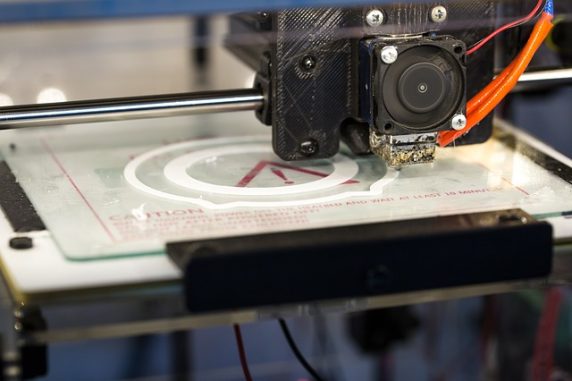
3D printers
Some scientists are working to produce a material that can create complex structures, living materials such as ink. This would allow for more complex applications in the future.
There is continuous progress with 3D printers. In a few years there will probably be almost nothing that a machine cannot make. These two new developments confirm this.
Researchers have developed a 3-D printer that uses living materials to create advanced new materials. Using bacteria to print ink, they created complex “living” materials such as plastics, protective coatings, and organically-reactive polymers. Researchers at MIT create a machine that is capable of printing ten times faster than any printer on the market. The machine is also able to produce materials like metal, ceramic & carbon fiber that are not possible with other machines.
Swiss researchers developed a printer that can produce 3D-printed objects found in nature, disease and process waste. They used a mixture of polymers and the natural polysaccharides in plant walls to create the ink used in the printer. There are many different types of bacteria used to make all types of substances. As with most things, the type and amount of chemicals created will depend on the kind of bacteria used.
Flink
Four inks used can produce many different objects with a variety of properties. These inks can use bacteria that provide various results. Each ink is a mixture consisting of a biocompatible hydrogel (from hyaluronic acid), chains of sugar molecules, silica and bacteria. The ink has a texture similar to toothpaste. Christened “Flink” (Functional living ink), it can print any type of object.
It’s unclear how long bacteria can last inside those printed objects, but some researchers speculate that they can survive for a long time because they are oligarchic. The bacteria used are harmless, and the live-ink is completely safe. Researchers at the Massachusetts Institute of Technology (MIT) have developed an ink that consists of bacteria in order to detect toxins in water. The application is not limited to just medical use, other potential applications arising out of the invention include printing sensors and creating artificial skin grafts. To cleanup pollution, AI developers are making use of artificial intelligence. They are developing filters that can remove oil or other pollutants and get rid of the pollutants completely.
Two technical hurdles that need to be overcome are making printing faster and developing ways to make bio-printing possible on a large scale.
3D printing-turbo
The average 3D printer is able to produce an object at 20 cubic centimeters per hour. These printers are able to do this. In about an hour they can convert the output easily into Lego-type blocks.
With a laser built in and nozzles that have a heating system, the more expensive American printer can quickly turn out print jobs. It saves you time, effort and is now common in today’s hard times.
The researchers, led by Associate Professor Anastasio John Hart of the Department of Mechanical Engineering at the Massachusetts Institute of Technology (MIT), who published the paper in the journal Additive Manufacturing, demonstrated the capabilities of the new printer by producing within five to ten minutes a glass frame, a bevel gear and a small replica of the MIT dome.
If you liked this article, then you might also enjoy this one.
Author: PC-GR
The World of Technology