Presentation of MOSAIC browser | Techday, April 22nd
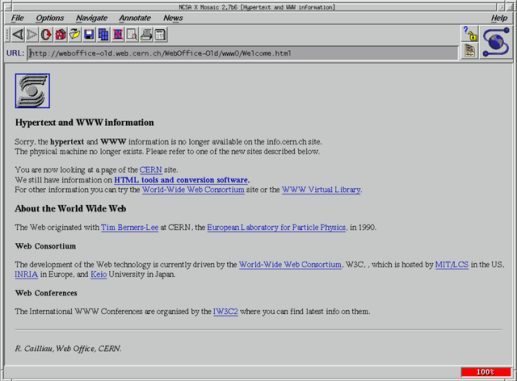
On this TECHDAY in history, on April 22nd 1993, one of the first web browsers was introduced. That was Mosaic, often reffered to as the “world’s first popular browser”, developed by Mark Adrisen and Eric Bina at the National Center for Supercomputing Applications (NCSA) at the University of Urbana-Champaign in Illinois.
After its release, the browser quickly gained popularity due to its graphical user interface (GUI), which made it much easier to use than earlier text-based browsers such as Cello and Lynx. Mosaic was able to display images inline with text, making it much more visually appealing than previous browsers. Mosaic was also the first browser to support clickable hyperlinks, which allowed users to easily navigate between different web pages by clicking on links.
One of the key features of Mosaic was its support for multiple platforms. It was available for a wide range of operating systems, including Windows, Macintosh, and Unix. This made it possible for users on any platform to access the web.
Mosaic was eventually succeeded by other browsers, such as Netscape Navigator and Internet Explorer, which added additional features and became more popular. However, Mosaic was instrumental in the early development of the web and helped to make it more accessible to the general public.
This was just a snapshot on the presentation of the techday series. Gather more information on the matter. Indulge into the history by further reading more.
Alternatively, find more technology stories. If you found this brief post interesting, then you might also enjoy this one as well.
Author: PC-GR
The World of Technology