A robot that imagines itself
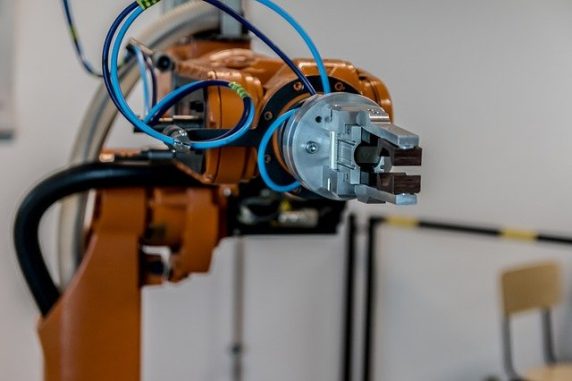
Humans are able to imagine themselves in various situations as well as reflect on their past. Researchers at Columbia University have created the first robot capable of Imagining itself. From scratch, the robot can create a new image of itself and learn from it to better adapt to its environment. Now, we are entering a new step in the process of creating robots that can monitor themselves, which will make them more autonomous and adaptable. However, some people worry that humanity will lose control of these machines at some point in the future.
Researcher Prof. Hodd Lipson lead a team of specialists at the Department of Mechanical Engineering and the paper was published in the American Robotics journal Science Robotics. As Lipson said, “although our robot’s ability to imagine itself is still rudimentary compared to humans, we believe it is on the right track for self-aware machines.”
Robots will continue to make progress in the future, but they still need some help to upload images. This robot will do everything on its own, as programmed. It can use simulations of itself to adapt to different environments. Able to self-correct, will remain aware of its “self” still.
“It’s vital that robots learn by simulating themselves. Especially, if we want robots to become independent and adapt quickly to scenarios that their creators didn’t anticipate”. Lipson said, director of Columbia’s Creative Machines Laboratory.
Initially the robots in arm forms weren’t accurate enough in understanding themselves. For example, they couldn’t understand the connection of every one of its joints one another. But thanks to the use of a deep learning algorithm, its self-image gradually improved over a 35-hour period. And eventually it produced a model of itself with only minor deviations from reality.
Then, according to APE-MPA, he managed to do a task. Pick up an object from the ground and place it in a container with 44% accuracy. “It’s like trying to grasp a glass of water with your eyes closed, which is difficult even for humans,” said researcher Rovert Kwiatowski.
When the engineers inserted a faulty component in the robotic arm, it was able to locate itself and fix the problem. The researchers are looking to see if robots can transfer the technology they use to move around, think about their own bodies and minds in the future.
US Defense Advanced Research Projects Agency, DARPA, funds and supports the research.
If you enjoyed this article, then you may also like this one.
Author: PC-GR
The World of Technology