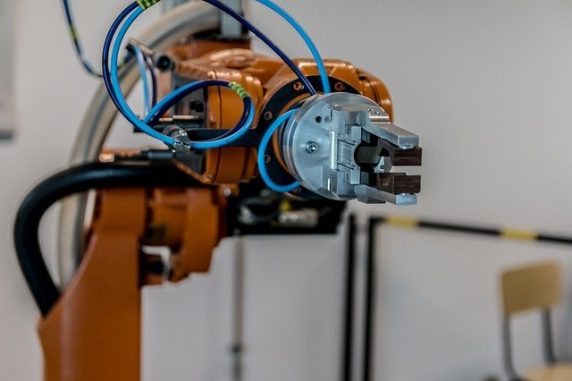
Robots are changing everything
Robots, all kinds of ‘smart’ machines, and AI algorithms in general are infiltrating workplaces and automating employment. Robots, though, may also create almost twice as many new jobs by 2025 than they are expected to eliminate.
“The future of Jobs”
This is the assessment of a new World Economic Forum (WEF) report, entitled “The Future of Jobs“. Athens/Macedonian News Agency published the report. According to the data, by the middle of the next decade big changes will take place. Thanks to the AI, 133 million new jobs may open, while 75 million old ones will likely expire.
However, according to WEF President Klaus Schwab, the “gains” for the economy can’t be taken for granted unless more investment is made in education so that workers can keep up with what’s expected of them in their new work environment. In the report, he states. “For action by governments, businesses and workers to seize a window of opportunity, but one that is closing fast, to reate a new future of good jobs for all”.
Executives agree that machines will occupy around 50% of today’s jobs in 2025. This risk of automation applies to both office and production line work. For example, in accounting departments. By 2025, “intelligent” machines will perform 57% of tasks, in comparison with 29% today.
The report points out that in almost all countries specific IT specializations are in increasing demand, such as software engineers, data analysts, cloud specialists, programmers developing mobile applications, etc. On the other hand, careers like administrative assistants and customer service representatives are becoming more obsolete. AI substitues the demand for accountants and technicians is being substituted in part.
Four Key Technologies
According to the survey, US, China, India, Israel and Germany were among the top countries with high AI skills penetration. The four key technologies for the 2018-2022 period are the following. High-speed mobile internet and IoT, artificial intelligence/virtual reality, big data analytics and cloud computing.
AI and smart machines will reshape the way we do not only our jobs, but a lot of other tasks. Machines will replace human work in certain areas while humans will be more involved in the strategies behind them and their use. The report also recognizes the uncertainty of these “smart” jobs, the nature of them and how permanent they will be. There is also concern that in order to succeed at these new types of jobs, workers will require lifetime training to meet the ever-changing demands. By 2022, more than half of the workforce is going to need retraining in order to prevent gaps in technological skills.
A majority of business professionals in the survey are anticipating some level of staff reduction over the next few years due to automation. Of those surveyed, 38% expect an increase as well.
According to the report, “transformations, if managed wisely, can lead to good features. These include employment, good jobs and improved quality of life. At changes mismanaged, there is a risk of widening the skills gap, greater inequality and wider polarisation.”
If you liked this article, then you might also enjoy this one.
Author: PC-GR
The World of Technology