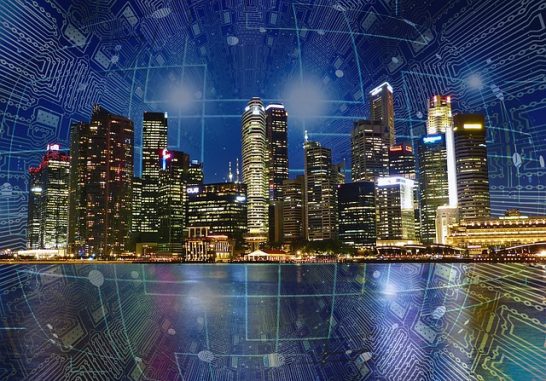
What exactly is a “smart” city?
A technologically smart city is an urban area that, realizing the value of technological progress,
exploits it in various ways. It manages all its resources, services and assets to its advantage,
investing in sustainability, efficiency, close and sane contact with the citizens and the economy
through reduced resource consumption costs. As there is no established term to describe the smart city,
it is judged solely on the basis of various aspects such as the levels of governance, mobility, energy profile,
environmental impact and other aspects that will be briefly analyzed below for smart cities in future.
The smart cities in future will be transformed. Probably their traditional networks,
infrastructure and services, as well, will become more efficient and both residents and businesses alike
will benefit from these developments. We can realize these achievements through the use of digital
solutions and tools. In such a city, digital technology will thus contribute in a variety of ways in different areas,
from better management of natural resources, reducing CO2 emissions, upgrading urban transport networks,
to improving the level of service delivery to better management of the city and servicing citizens effectively.
In addition to the contribution of technological means, the importance of human involvement in this process
should be particularly emphasized.
Better use of natural resources
Natural resource management systems are constantly evolving alongside digital technology while utilizing it.
Thus, the linear model of extracting and exploiting raw materials, then creating products, which are usually
discarded after their use is exhausted, tends to redefine and firmly change this approach. It is thus
a circular economy, in which the industrial approach to resource management, the life cycle and environmental
impact is being changed. In addition to the economic benefits, by reusing products, industries could stabilize
the system of managing natural resources. It is thus foreseen that the adoption of innovative models,
both technological and operational, will follow in the future with the new data, while the solutions
found will relate to the relationship between efficiency improvements and cost reductions.
Upgraded and clean water supply
Universal access to drinking water has been an overriding objective of European countries over the last years.
Improving the management of water sources involves reducing pollution from untreated waste,
eliminating discharges, improving existing facilities such as refineries or constructing new efficient ones and
ensuring a sustainable supply. New perspectives for recycling and reuse, as well as meaningful support to
local communities for its optimal management are taken into account in the future components.
With the use of applied science, new technologies and taking into account not only human needs
but also environmental imperatives, actions will be taken for the sustainability of smart cities in future.
Waste disposal facilities
Particularly today, we should carry out waste disposal operations with a view to avoiding any risk to human health and
minimizing the impact on the environment by means of procedures that are as least harmful to it as possible.
It is essential that we apply scientifically accepted and documented technical solutions for the management of
waste of all kinds, whether urban or industrial. The studies, design and construction of infrastructure
will ensure that it is treated efficiently and sustainably without affecting the urban network and will provide
substantial support for local authorities. Indeed, in combination with the above, with rational planning,
we coule reuse wastewater effectively after appropriate treatment, biological, physical or chemical,
to save resources, reduce operational costs in terms of industries and improve the prospects of activities
in a tangible way.
Energy-efficient and eco-friendly ways of lighting and heating
The energy problem, like that of a stable supply of drinking water, is becoming more and more acute
and it is essential that we developing technologies continuously apply to meet energy needs
and ensure sustainability in the future. Some of the components we should considere are
proper management of resources, primary energy savings, energy efficiency and environmental friendliness,
taking into account the current economic downturn, the wide energy dependency and the level of
climate change today. Some “smart” systems already available on the market are sensor technology,
which incorporate high functionality and automation in recording the energy performance of buildings.
For years now, the concepts of bioclimatic “green” homes, solar thermal energy and so on
have become familiar.
Smarter urban transport networks
The problem of urban mobility is already plaguing most European cities. A sustainable system for dealing with
this phenomenon would contribute significantly not only to decongesting traffic, but also to the efficient
and economic competitiveness of the city itself. It involves a sustainable and holistic approach, including
raising public awareness of the need for a change in environmental awareness, upgrading the transport
fleet and decoupling from private cars for the majority of urban journeys. Road networks, parking
areas and green spaces should, also, be part of the equation.
Fewer emissions
The ambitious objectives of countries today include reducing greenhouse gas emissions in order to
combat climate change. A key objective by 2050 is climate neutrality, which will achieve
gradually through holistic changes in the areas of transport (by land, air and sea), resource
and waste management. The committee will record annually the progress to monitor average annual
carbon dioxide emissions.
City administration closer to the people and more interactive
The integration of new technologies in local government reduces the digital gap and creates channels
of communication with the society. More importantly, improving the services provided, for example through digital citizen
service platforms, makes it easier for citizens by creating a sense of solidarity and trust in the state
and its representatives, as well as equality in terms of access to these services and the ability to use them.
In this way, all the potential of technology will be serve citizens, making an administration
more interactive and effective.
To conclude, the two key characteristics of a smart city are the use of digital technology and the active
participation of citizens. Digital platforms and city-wide open databases are some of the ways in which technology
can improve city services with the help of citizens. This also means faster and smarter solutions to any challenge
that may arise. In general, smart cities in future are sustainable and environmentally friendly cities where citizens
and their needs come first. Their ultimate goal is to harness technology and innovation to improve
all aspects of citizens’ daily lives.
For more interesting stories about how technology can change our lives and our cities check also these articles about driverless buses and Japanese futuristic cities.
You can find more about the European Union’s plans for Smart Cities in: https://ec.europa.eu/info/es-regionu-ir-miestu-pletra/temos/miestai-ir-miestu-pletra/miestu-iniciatyvos/smart-cities_en.
Author: PC-GR
The World of Technology