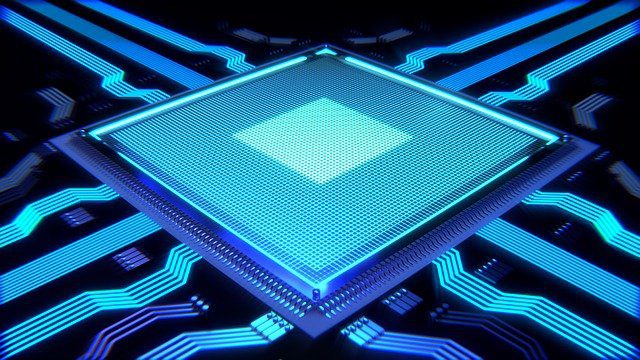
On June the 6th at Apple’s Worldwide Developers Conference (WWDC), the company unveiled its new Apple M2 chip. Apple’s next-generation silicon chip concerns specifically Macintosh computers as a Central Processing Unit (CPU) and Graphics Processing Unit (GPU). After the four models of M1 chips that debuted as recently as 2020, Apple is now ready to move on to the most powerful chip. The first M2 models are the MacBook Air and MacBook Pro 13. The promises of improved performance are many, so the expectations from the buying public are just as high.
According to Apple’s press release, “Built using second-generation 5-nanometer technology, Apple M2 chip further ups the M1’s industry-leading performance per watt with a 18% faster CPU, a 35% more powerful GPU and a 40% faster Neural Engine. It also delivers 50% more memory bandwidth compared to the M1 and up to 24GB of fast unified memory.” The upgrade leap from the first-generation chip is, thus, definitely a calculated one.
The fields of improvement
It’s worth noting that this new chip consists of 20 billion transistors, 25% more than its predecessor per watt. It retained the ARM-based architecture of the M1, but improved the lithography process of etching the board. This means that it squeezed in an additional 4 billion transistors (from 16 billion to 20 billion), increasing its overall performance. It is estimated to be 1.4x times faster than the M1 and 15x times faster than the company’s older Intel-powered models. In benchmark tests, the M2 chip scored 30627, while the first-generation chip, 21001 points.
The M2, based on the manufacturer’s statements, is significantly faster than its competition. It is considered more efficient on lower power usage levels with the same power consumption levels thanks to the higher number of said transistors. At the same power, it offers 18% more efficiency and features up to 10 GPU cores, two more than its predecessor, M1. In addition, upgraded features include an improved multimedia engine with video encoder. The chip also supports 8k H.264, H.265 and HEVC video, ProRes video engine for playing multiple 4k, as well as 8k, video streams.
M2 acquires a new image signal processor (ISP) and the company’s latest Secure Enclave for upgraded security. The memory controller has been upgraded – from LPDDR4x to LPDDR5x RAM – to nearly double the bandwidth, from 69GB/s to 100GB/s. Also, 24GB of unified memory is supported.
What about gaming?
Gaming support has minor improvements on the second-generation chip, but problems still exist mainly with the software part. Limited support is still available for better known gaming titles at this stage.
The first models in release with the Apple m2 chip, the MacBook Air and MacBook Pro13”, carry features richer than ever. Apart from the thin and light aluminum body or the larger display, noticeable upgrades we can find in the camera and microphone. The most notable feature is the battery life, which can reach up to 20 hours of continuous autonomy. All this, of course, depends on the energy requirements of running applications.
Features of the first two models with M2:
MacBook Air
- Display: 13.6in LCD (2560×1664; 224 ppi) Liquid Retina, True Tone Tech
- Processor: Apple m2 chip with 8 or 10-core GPU or 16-core Neural Engine
- RAM: 8, 16 or 24GB
- Storage: 256GB, 512GB, 1TB or 2TB SSD
- Operating System: macOS 12 Monterey
- Camera: 1080p FaceTime HD
- Media Engine: H.264, HEVC, ProRes (and ProRes RAW)
- Connectivity: Wifi 6, Bluetooth 5, 2x USB-C/Thunderbolt 3, headphones
- Battery: up to 18 hours video playback, 15 hours wireless web playback
- Dimensions: 215 x 304.1 x 11.3mm
- Weight: 1.24kg
MacBook Pro 13
- Display: 13.6in LCD (2560×16; 227 ppi) Retina, True Tone Tech
- Processor: Apple M2 with 8 or 10-core GPU or 16-core Neural Engine
- RAM: 8, 16 or 24GB
- Storage: 256GB, 512GB, 1TB or 2TB SSD
- Operating System: macOS 12 Monterey
- Camera: 720p FaceTime HD
- Media Engine: H.264, HEVC, ProRes (and ProRes RAW)
- Connectivity: Wifi 6, Bluetooth 5, 2x USB-C/Thunderbolt 3, headphones
- Battery: up to 20 hours video playback, 17 hours wireless web usage
- Magic Keyboard Touch Bar
- Dimensions: 212.4 x 304.1 x 15.6mm
- Weight: 1.4kg
The first not so positive remarks so far
So far two are the most problematic points, firstly battery autonomy, but also the processing speed of the SSD in a certain model. A direct comparison of the performance of two MacBook Pro 13” models, one with M1 and the other with the M2 chip was attempted. With continuous video playback, the battery of the older model lasted almost a full hour longer (42 minutes). This indicates that it doesn’t meet the levels Apple claims. In terms of the SSD read speeds, they were 50% lower for the 256GB SSD model in particular and write speeds were 30% lower (these tests were conducted in Blackmagic’s Disk Speed Test app).
The problem revolves the use of a single 256GB NAND flash chip, versus two 128GB capacity chips for the compared model with M1. Judging by the performance of the base model’s SSD with the M2, it seems as a setback. Similarly, in Cinebench R23 tests, the M2 scored marginally lower in the energy efficiency categories not only with single-core, but also multi-core compared to all advanced versions of the M1.
To conclude
Bottom line, for those who think that the second-generation silicon chip is not a notable upgrade, there is more to come in the future. Rumors are circulating about the M2 Pro version and its appearance in a new Ipad Pro or MacBook Air 15-inch or even the MacBook 12-inch which are expected to hit the market between 2022 and 2023. Some users may see a conservative evolution, however the step has been taken and even more revolutionary versions of the M2 are expected in the future (Pro, Max, Ultra as we saw with the M1).
At this stage, the M2 offers more than the M1, but is barely in the same range as the M1 Pro and M1 Max. This is justified, because products with these processors have recently been released to be replaced immediately.
In fact, in some areas, the M1 Pro, and certainly the M1 Max, outperforms the plain M2. To mention some of them are the memory bandwidth, cores, computing and graphics power. Even the simple M1 released, is the most affordable proposition, as any product with the Apple M2 chip is more expensive by about 250€. With the performance differences and based on a first evaluation of the simple M2 model, no interest in upgrading with new purchases is identified, at least until upgraded versions are released.
Click for more stories about processors from IBM and Apple.
You can find out more news about Apple and its products at: https://www.apple.com/.
Author: PC-GR
The World of Technology