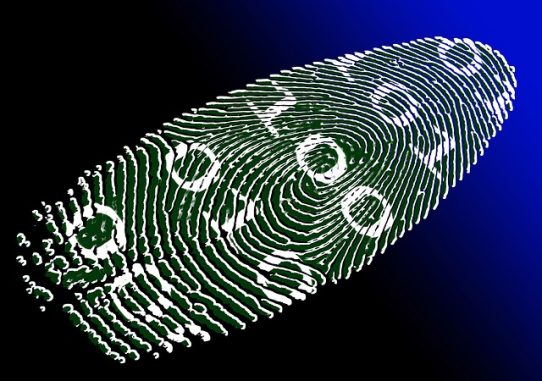
Digital ID, the e-wallet of the future
The digital identity, which stores a plethora of information on the internet, is up-and-coming. It’s like an electronic wallet that store all your personal information. It’s a lot safer and easier, though, to access than cash.
As Die Welt reports, in Germany there’s a Verimi platform that offers users the option to manage their digital identity. Once you verify your identity on the platform, the system sends you an email from Verimi. The email contains exercises on how to change your passwords. After login and subscribing by SMS.
With the verified identity deposited, it seals in a data vault. “So it can be used again and again without having to be identified again,” explains Torsten Zodag, CEO of Verimi. Moreover, due to the high standards of security and data protection, the data can be used everywhere, including public authorities, insurance companies or banks.
However, there are also risks involved, Greek researchers tell APE-MPA. “The user must explicitly agree to the respective use. Without proven consent, there is no data.”
“So it can be used again and again without having to be identified again,” explains Torsten Zodag, CEO of Verimi. Also, given the high standards for security and data protection, companies can share their data with organizations such as public authorities, insurance companies or banks.
However, there are also risks, Greek researchers tell APE-MPA. “The user must explicitly agree to the respective use. Without proven consent, there is no data.”
Examples
In the Winter of 2028. On a ski trip to Parnassos, you go to the company selling the necessary equipment and say out loud on your mobile phone, “Foot scanning transport”. The phone then sends the 3-D data of your feet to the salesman, who returns a short time later with a perfect pair of boots. You give your phone the “Payment OK” command and walk away. Now you don’t have to worry about carrying cash or cards anymore. With the recent development of “smart phones” and other devices, your payment needn’t go through a third party to process the transaction.
Say your name and the ATM will do the insurance card filling for you without any need to take off your skiing gloves. Some ATMs even have a camera that recognizes you. The next step is to ask ‘You want to get car insurance?’
“Is this a shocking vision of the future?” The APB posed the question. “Not at all. Many of the procedures described are theoretically possible today. A wallet, in electronic form. That way, we could prove our identity,” say the same sources.
Car Experience
It is clear that a digital identity would be useful in everyday life. There are lots of examples, like developments by car manufacturers who are now designing the car buying experience around a digital identity. “The vehicle will recognize you based on biometric features,” says Dr. Stefan Ime, Director of Digital Services at Volkswagen.
“Once the car knows who is in the driver’s seat, it will provide completely new services: the vehicle can directly access the user’s diary and plan routes on its own. And that’s not all: If the car’s computer detects that it’s lunchtime, it could suggest a restaurant stop,” says Dr. Ime.
Tomorrow’s car will be equipped with virtual wallets which can be used to pay for goods & services, including fast-food. It’ll also have electric chargers so that your fuel & electric expenses are always covered. This is what Volkswagen’s Dimension project has to offer.
Of course, if the vehicle knows the user’s digital identity, it can also customize the entertainment program. For example, when the driver enters the car, his or her favorite playlist will run automatically.
Digital identity also useful for health issues
Experts are confident that the digital identity will, in the long term, be much more useful for health issues as well. “The digital health record will also be part of it,” says Bert Amrich, professor at the Hasso Plattner Institute at the University of Potsdam. This would mean that the patient can easily provide any medical or hospital information about their medical data. “People would be able to have their data, of course anonymously, accessible to research,” says Amritsch. Scientists, in turn, will be able to analyze the mountains of data and look for solutions: What caused a disease? What treatments actually worked? Were there misdiagnoses?
It would even be possible to contain a person’s genome in the digital identity. The AP have reported that some US undergraduate students recieve an electronic copy of their genes to use at their own discretion. This comes with the hope it will help youngsters better understand genetics & the things they need to do in order to maintain a healthy lifestyle.
“In the long term, Medicine will use this data more” Amritsch believes. US researchers even say that in the future, every person will have a clock on their smartphone showing their remaining lifespan. If they exercise, they will be able to see immediately how much life time they gain. Accordingly, if they eat unhealthy food or live in a stressful environment, they can see their life expectancy.
If you liked this post, then you might also enjoy this one.
Author: PC-GR
The World of Technology