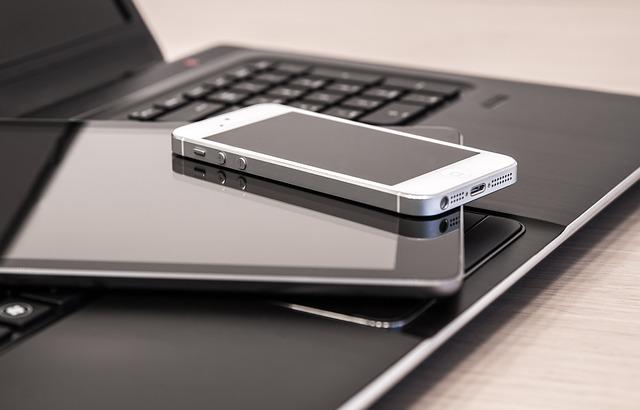
According to an analysis that research firm International Data Corporation (IDC) conducted, PC, smartphone and tablet shipments will decline this year due to various economic factors affecting the market. Such factors include inflation, the ongoing war in Ukraine and lockdowns due to the pandemic. All of these have a negative impact on global demand for electronic products. The flow of the chinese smartphone shipments are followed with high interest for various reasons.
The estimates
IDC predicts that computer shipments will fall by 8.2% this year, while those of tablets expectedly will decline by 6.2%. IDC makes similar negative predictions for the smartphone market. The company estimates that smartphone shipments will fall by 3.5% this year, to 1.31 billion devices. Other research firms, such as Hong Kong-based Counterpoint, make exactly the same estimates for electronic products. The reasons for this include inflation plaguing the global economy, along with lockdowns due to coronavirus, which have affected the production process of manufacturers in China.
First quarter of 2022
Starting the decline in global shipments from the first quarter (Q1) of 2022, i.e. January to March, major giants such as Xiaomi, the leading Chinese smartphone vendor, recorded a net loss for this period. The decline is as much as 20% compared to the October-December 2021 period. Inconsequentially, major contract manufacturers are recording declines in sales of electronic products.
The Problem
As is well known, China takes up 20% of global shipments. Of course, both shipments and domestic sales are affected in the country. Strict quarantines, reduced factory operations have contributed to the slowdown in chinese smartphone shipments and consumer sentiment. The supply chain has significantly disrupted. Canalys analyst, Toby Zhu, highlights shortages in the chain, but also reductions in component orders. Suppliers have to deal with the problem of oversupply and low demand for product inventories. Factories under these conditions are facing problems with upstream suppliers, but also with the downstream distribution of their products. Contract manufacturers, such as Pegatron and Compal Electronics in Taiwan, are seeing a decline in equipment inventory sales and also delays in shipments.
With regard to the delayed delivery of products, the following example will be given. The delivery time of 4G SoCs is approximately 30 to 40 weeks. For the A+G sensor, 32-36 weeks are estimated, while for OLED DDIC and Touch IC 20 weeks.
Second Quarter 2022
For this period, the decline in smartphone shipments reaches 8.7% year-on-year. This estimate was derived from the International Data Corporation’s (IDC) Worldwide Quarterly Mobile Phone Tracker’s (QMTV) preliminary data. Product supply has gradually improved due to an increase in production activity, but the situation remains unfavorable for other reasons. Rapid inflation, economic instability and uncertainty have reduced spending and increased global inventories. Estimates suggest that this situation will affect the entire year 2022.
Regional developments
Central and Eastern Europe (CEE) recorded the largest decline in the second quarter of the year. The rate of decline reached 36.5% year-on-year and was attributed to the war still raging in Ukraine. It should be noted that this region accounts for only 6% of global shipments.
In the Asia/Pacific region (excluding Japan and China, APeJC) the picture is quite different. The decline in Q2 2022 reached only 2.2%. It should be recalled, of course, that it accounts for almost half of all global shipments.
Examples of Companies
Despite the difficult times, the positions in the sales ranking did not change radically. Samsung retained the top position, and even achieved healthy growth in regions outside Europe. Apple remains in second place in the ranking, occupying 15.6% of the global market. In third place we find Xiaomi, with a 13.8% share of the total on electronic products. It recorded a 22% decline in annual profit, a loss estimated at 587 million yuan (i.e. $88 million); compared to 2021, it fell 3% points in market share. It was followed, at the same level, by Vivo and OPPO with shares at 8.7%. For the three Chinese companies, the decline in shipments amounts to 25%.
Regarding the chinese smartphone shipments, they fell by 15% in the June quarter and only Honor (spun off from Huawei) doubled shipments. That is, it reached 13.1 million units thanks to new devices for the entry-level market. Realme, in turn, equally increased its shipment rates due to increased demand for its mid- and high-end handsets.
The rise of Samsung and Apple
Samsung lowered its smartphone shipment target from 300 million units to 260 million units, as disclosed in The Elec. The original target for the year was to manufacture around 334 million products to ship 300. Of the 334 million, the 334 million would be manufactured at its own facilities, while only 50 million units would be manufactured at China’s joint developers. This proves that manufacturers, even big tech giants, are vastly changing their annual targets. Compared to the last two years, the situation today has changed. In 2021, for example, the annual shipment of electronic products calculates at 270 million units. 2020 saw the biggest dip, with just 250 million units.
Apple is the only company that so far does not seem affected by the situation. Its share increased from 19% to 21% of the total. In addition, shipments increased from 8.8m to 8.9m units per year regardless of the inflation.
It’s interesting that these two leading companies have experienced hardships in the past. You can read more about this, here.
Speculations
SMIC, Semiconductor Manufacturing International Corporation, made estimates of gloomy developments with consumer electronics demand. Probably, signs of recovery will not be seen anytime soon.
Despite negative forecasts for 2022, IDC notes that PC shipments will remain significantly above pre-pandemic levels. In fact, it highlights that the forecast for 2023 is that the market will return to positive territory. IDC believes the market will recover and rebound through 2026, on base of not only the inflation. On the other hand, research firm NPD made other statements about the near future. The current problems we will encountere in the next two years as these market fluctuations lead to disorientation of manufacturers and vendors on electronic products.
In the manufacturing “arena”, IDC says that the situation will likely less affect iPhones, due to Apple’s “greater control over its supply chain” and also because its (high-end) devices target consumers less affected by inflation.
Summing up
In these volatile times, the electronics industry takes a blow. There have been major component shortages, production problems and other challenges that have shaken the global picture today. Supply chain problems have equally led to the downturn in global shipments.
Manufacturers, in the face of this volatility, will try to mitigate the impact. Production and sales targets are constantly changing and manufacturing companies note developments on a quarterly regular basis.
Shipments have shrunk to historic lows, down to decade-low levels. Demand for technology products remains high in parts of Europe, despite the current situation.
You can always read more about technology statistics at https://www.idc.com/.
Author: PC-GR
The World of Technology